Solar Energy for Cold Storage Warehouses: Installation Cost, Savings, Battery Storage and ROI
- Why Cold Storage Warehouses Are Ideal for Commercial Solar
- Refrigeration Creates a Large Continuous Electrical Load
- Large Roof Areas Can Support Significant Solar Capacity
- Cooling Demand Often Increases During Sunny Weather
- How Solar Reduces Cold Storage Electricity Expenses
- Reducing Kilowatt-Hour Charges
- Reducing Demand Charges
- Reducing Exposure to Electricity-Price Increases
- Commercial Solar Installation Cost for Cold Storage Warehouses
- Cold Storage Solar Cost Breakdown
- Cold Storage Solar Cost Calculation Example
- Gross Solar Installation Cost
- Additional Project Expenses
- Estimated Incentives and Financial Benefits
- Estimated Annual Electricity Savings
- Solar Plus Battery Storage for Refrigerated Warehouses
- Illustrative Battery Storage Costs
- Thermal Energy Storage for Cold Storage Facilities
- Battery Storage vs Thermal Storage
- Can Solar Provide Backup Power for a Cold Storage Warehouse?
- Cold Storage Microgrids and Energy Resilience
- Solar Financing Options for Cold Storage Warehouses
- Improving Refrigeration Efficiency Before Installing Solar
- Solar Energy for Cold Storage Warehouses in Texas
- Solar Energy for Cold Storage Warehouses in Florida
- Solar Energy for Cold Storage Warehouses in California
- How to Improve Cold Storage Solar ROI
- Analyze Interval Electricity Data
- Complete a Roof and Structural Assessment
- Avoid Oversizing the System
- Model Solar, Battery and Thermal Storage Separately
- Use Conservative Financial Assumptions
- Compare Experienced Contractors
- Questions to Ask a Cold Storage Solar Contractor
- Frequently Asked Questions
- Are solar panels suitable for cold storage warehouses?
- How much does solar for a cold storage warehouse cost?
- How much can a refrigerated warehouse save with solar?
- Can solar power refrigeration equipment?
- Will solar keep the freezers running during an outage?
- Should cold storage warehouses install batteries?
- What is thermal energy storage?
- What is the typical solar payback period?
- Can a solar system be installed on an older warehouse roof?
- Is a PPA suitable for cold storage warehouses?
- Build a Lower-Cost and More Resilient Cold Storage Facility
Cold storage warehouses are among the most electricity-intensive facilities in the commercial and industrial property market.
Unlike conventional warehouses, refrigerated facilities must continuously power compressors, evaporator fans, condensers, pumps, lighting, control systems, loading areas, and temperature-monitoring equipment. A temporary loss of cooling can damage inventory, interrupt distribution operations, violate customer agreements, and create substantial financial losses.
These facilities therefore face two major energy challenges:
High electricity expenses and the need for dependable power.
Solar energy can help cold storage operators address both issues.
A properly designed commercial solar system can reduce daytime electricity purchases, improve energy-cost predictability, support corporate sustainability goals, and potentially lower demand charges. When combined with battery storage, thermal energy storage, generators, and automated controls, solar can also become part of a broader resilience strategy.
Commercial refrigeration represents a significant portion of U.S. building energy consumption. The Department of Energy reports that commercial refrigeration uses roughly 1.3 quadrillion British thermal units of source energy annually, or approximately 7% of total commercial-building energy use.
However, every cold storage solar project requires careful analysis.
Facility operators must evaluate refrigeration load, roof and land availability, electricity tariffs, utility interconnection, equipment temperatures, structural requirements, financing, incentives, battery sizing, and backup-power expectations.
This guide explains how solar energy solutions for cold storage warehouses work, what they may cost, how much they may save, and how operators in Texas, Florida, and California can evaluate project economics.
Why Cold Storage Warehouses Are Ideal for Commercial Solar
Cold storage facilities often have several characteristics that align well with solar generation.
Refrigeration Creates a Large Continuous Electrical Load
A refrigerated warehouse may require electricity for:
- Compressors
- Condenser fans
- Evaporator fans
- Defrost systems
- Pumps
- Refrigerant controls
- Blast freezers
- Dock equipment
- Lighting
- Security systems
- Temperature monitoring
- Automated storage systems
- Office and administrative areas
Some refrigeration equipment operates continuously, while other equipment cycles according to temperature, outdoor weather, product movement, and loading activity.
Because the facility has a substantial daytime load, a large percentage of solar generation may be consumed directly on-site.
This can improve financial performance because the warehouse avoids purchasing utility electricity rather than exporting excess production at a potentially lower rate.
Large Roof Areas Can Support Significant Solar Capacity
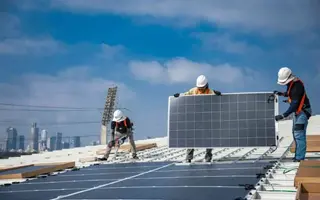
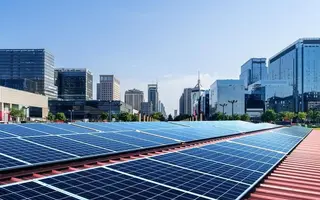
Cold storage warehouses frequently have large, flat roofs with relatively limited shading.
Potential solar locations include:
- Main warehouse rooftops
- Loading-area canopies
- Adjacent dry-storage buildings
- Parking carports
- Ground-mounted areas
- Employee parking lots
- Distribution-yard structures
A large roof may support hundreds of kilowatts or several megawatts of solar capacity, depending on roof condition, structural limits, equipment placement, fire-code setbacks, and available electrical infrastructure.
Cooling Demand Often Increases During Sunny Weather
Refrigeration systems generally work harder when outdoor temperatures rise.
Solar output also tends to be strongest during sunny daytime periods.
This creates a useful operational match: the solar system may produce more electricity when cooling demand and utility costs are relatively high.
The match is not perfect, but it can increase the value of on-site solar compared with facilities that use most of their electricity at night.
How Solar Reduces Cold Storage Electricity Expenses
Solar panels generate electricity behind the warehouse’s utility meter.
Electricity produced and consumed on-site reduces the amount purchased from the grid.
The value of those savings depends on:
- Utility energy rates
- Demand charges
- Time-of-use pricing
- Solar-production profile
- Refrigeration load
- Export compensation
- System size
- Financing costs
- Maintenance expenses
Reducing Kilowatt-Hour Charges
Suppose a refrigerated warehouse installs a solar system that produces 2,000,000 kWh per year.
If the average avoided electricity price is $0.13 per kWh:
2,000,000 kWh × $0.13 = $260,000 in estimated annual gross energy savings
Actual savings may vary by time of day and utility tariff.
Electricity produced during high-rate periods may be worth more than electricity generated when grid power is inexpensive.
Reducing Demand Charges
Many cold storage warehouses pay demand charges based on their highest short-term electricity demand during each billing period.
Demand spikes may occur when:
- Multiple compressors start together
- Blast freezers operate
- Loading doors remain open
- Defrost cycles overlap
- Outdoor temperatures rise
- Product is rapidly pulled down to storage temperature
Solar can reduce demand charges when these peaks occur during strong solar-production hours.
Battery storage can make demand reduction more predictable by discharging when facility demand approaches a specified threshold.
Reducing Exposure to Electricity-Price Increases
Utility prices and delivery charges can change over time.
Solar allows a warehouse to generate a portion of its electricity at a more predictable long-term cost.
This can help operators forecast:
- Storage pricing
- Customer contracts
- Distribution expenses
- Facility operating margins
- Long-term capital budgets
Commercial Solar Installation Cost for Cold Storage Warehouses
Commercial solar costs depend on system size, installation type, equipment selection, labor, structural work, utility requirements, and electrical upgrades.
The following estimates are broad planning ranges rather than contractor quotes.
| Solar System Size | Example Cold Storage Application | Illustrative Cost per Watt | Estimated Gross Cost |
|---|---|---|---|
| 100 kW | Small refrigerated warehouse | $1.80–$3.00 | $180,000–$300,000 |
| 250 kW | Regional food storage facility | $1.60–$2.70 | $400,000–$675,000 |
| 500 kW | Medium cold-chain warehouse | $1.50–$2.50 | $750,000–$1.25 million |
| 1 MW | Large refrigerated distribution center | $1.40–$2.40 | $1.4–$2.4 million |
| 2 MW | Major cold storage campus | $1.30–$2.30 | $2.6–$4.6 million |
| 5 MW | Large food-logistics or processing complex | $1.20–$2.20 | $6–$11 million |
Actual costs may rise when the project requires:
- Roof reinforcement
- Roof replacement
- New switchgear
- Transformer upgrades
- Utility interconnection studies
- Extensive trenching
- Solar carports
- Battery storage
- Microgrid controls
- Specialized fire-safety systems
Cold Storage Solar Cost Breakdown
A complete project proposal may include several major cost categories.
| Project Component | Typical Consideration |
| Solar modules | Efficiency, warranty and available roof space |
| Inverters | Capacity, redundancy and maintenance accessibility |
| Mounting equipment | Ballasted, attached, ground-mounted or carport |
| Electrical equipment | Switchgear, transformers and protection systems |
| Structural engineering | Roof loading, wind resistance and attachment design |
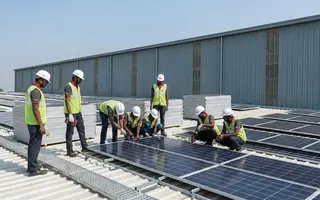
| Installation labor | Crane access, safety and operating-hour restrictions |
| Interconnection | Utility studies, meters and required upgrades |
| Monitoring | Solar production and facility energy integration |
| Battery storage | Peak shaving, load shifting and backup support |
| Energy controls | Coordination of refrigeration, solar, batteries and generators |
Operators should confirm whether the proposal includes all electrical and utility work.
A low advertised cost per watt may exclude expensive transformer, roofing, or interconnection requirements.
Cold Storage Solar Cost Calculation Example
Consider a hypothetical refrigerated distribution facility evaluating a 1.2 MW rooftop solar installation.
Gross Solar Installation Cost
System size:
1.2 MW = 1,200,000 watts
Assumed installed cost:
$1.85 per watt
Gross solar cost:
1,200,000 × $1.85 = $2,220,000
Additional Project Expenses
| Additional Expense | Estimated Cost |
| Roof reinforcement | $140,000 |
| Switchgear and transformer upgrades | $180,000 |
| Utility interconnection | $75,000 |
| Monitoring and refrigeration-control integration | $45,000 |
| Contingency | $120,000 |
| Total Additional Expenses | $560,000 |
Adjusted gross project cost:
$2,220,000 + $560,000 = $2,780,000
Estimated Incentives and Financial Benefits
Assume the owner estimates $780,000 in qualifying tax credits, depreciation value, utility incentives, or other financial benefits.
Estimated effective investment:
$2,780,000 − $780,000 = $2,000,000
Businesses should verify every incentive with qualified tax and financial professionals.
The IRS states that qualified clean-electricity facilities and energy-storage technology placed in service after December 31, 2024 may qualify for the Clean Electricity Investment Credit. The base credit is 6%, with potential increases when applicable requirements are satisfied.
Estimated Annual Electricity Savings
Assume annual solar production of:
1,800,000 kWh
Average avoided electricity price:
$0.135 per kWh
Gross energy savings:
1,800,000 × $0.135 = $243,000
Estimated annual demand-charge savings:
$42,000
Estimated annual maintenance:
$20,000
Estimated net annual benefit:
$243,000 + $42,000 − $20,000 = $265,000
Estimated simple payback:
$2,000,000 ÷ $265,000 = approximately 7.5 years
This simplified example excludes financing interest, electricity-price escalation, equipment degradation, tax timing, and the time value of money.
Solar Plus Battery Storage for Refrigerated Warehouses
Battery storage can increase the value of commercial solar by shifting electricity across time and responding to short-term demand peaks.
Potential uses include:
- Peak shaving
- Demand-charge reduction
- Time-of-use optimization
- Short-duration backup
- Refrigeration ride-through
- Generator support
- Power-quality management
- Demand-response participation
Illustrative Battery Storage Costs
| Battery Capacity | Example Application | Illustrative Installed Cost |
| 250 kWh | Small refrigeration loads or controls | $200,000–$450,000 |
| 500 kWh | Medium warehouse peak shaving | $350,000–$850,000 |
| 1 MWh | Large demand-management project | $700,000–$1.6 million |
| 2 MWh | Refrigeration support and load shifting | $1.4–$3.2 million |
| 5 MWh | Campus-scale storage or microgrid | $3.5–$8+ million |
Battery pricing varies according to power output, duration, chemistry, installation, warranty, fire protection, and controls.
Battery storage should be modeled separately from solar because it has different operating limits, degradation characteristics, replacement expectations, and revenue opportunities.
Thermal Energy Storage for Cold Storage Facilities
Cold storage warehouses have another storage option that may be highly relevant: thermal energy storage.
Instead of storing electricity directly, thermal storage stores cooling capacity.
Examples include:
- Ice storage
- Chilled-fluid storage
- Frozen-product thermal buffering
- Controlled temperature precooling
- Phase-change materials
A warehouse may use lower-cost electricity or excess solar production to cool a thermal-storage medium. The stored cooling can then reduce compressor operation during expensive or high-demand periods.
The Department of Energy identifies thermal energy storage as a technology that can improve building efficiency and demand flexibility, including applications involving refrigeration systems.
Battery Storage vs Thermal Storage
| Technology | Stores | Best Use |
| Lithium-ion battery | Electricity | Flexible power, peak shaving and backup |
| Ice storage | Cooling capacity | Shifting refrigeration or HVAC load |
| Chilled-fluid storage | Thermal energy | Large cooling systems |
| Product precooling | Cooling within inventory | Operational load shifting |
| Hybrid system | Electricity and cooling | Maximum flexibility |
Thermal storage may offer lower costs for shifting refrigeration demand, while batteries can serve a wider range of electrical loads.
Some warehouses may benefit from using both.
Can Solar Provide Backup Power for a Cold Storage Warehouse?
Solar panels alone generally do not keep a warehouse powered during a utility outage.
Most grid-connected solar systems automatically shut down when the grid fails unless they are connected to appropriately designed:
- Battery storage
- Islanding inverters
- Microgrid controls
- Electrical-isolation equipment
- Generators
- Load-management systems
This safety feature protects utility personnel and equipment.
For cold storage operators, backup planning should begin by identifying critical loads.
These may include:
- Refrigeration compressors
- Control systems
- Evaporator fans
- Temperature alarms
- Security systems
- Network equipment
- Emergency lighting
- Dock controls
Powering an entire large facility for many hours may require a very large battery.
A more practical design may support selected refrigeration zones and critical controls while generators handle the largest loads.
Cold Storage Microgrids and Energy Resilience
A microgrid coordinates multiple energy resources and can sometimes operate independently from the utility.
A cold storage microgrid may combine:
- Solar panels
- Battery storage
- Thermal storage
- Diesel generators
- Natural gas generators
- Utility electricity
- Automated load controls
- Refrigeration-management software
During normal operation, the system may minimize energy and demand costs.
During an outage, the microgrid can isolate from the utility and prioritize essential refrigeration loads.
The financial value of resilience can be substantial because a prolonged refrigeration failure may result in:
- Spoiled food
- Pharmaceutical losses
- Customer claims
- Contract penalties
- Cleanup expenses
- Emergency transportation
- Business interruption
- Reputational damage
These avoided-loss benefits should be evaluated separately from ordinary utility-bill savings.
Solar Financing Options for Cold Storage Warehouses
Cold storage operators may use several financing structures.
| Financing Option | Upfront Capital | Ownership | Main Consideration |
| Cash purchase | High | Business-owned | Potentially strongest lifetime savings |
| Commercial solar loan | Low to moderate | Usually business-owned | Interest raises total cost |
| Equipment financing | Varies | Depends on agreement | Preserves working capital |
| Solar lease | Often low | Third-party owned | Fixed payments and limited ownership |
| On-site PPA | Often low | Third-party owned | Facility purchases generated power |
| Energy-service agreement | Varies | Depends on structure | May combine efficiency and solar |
| Property-based financing | Varies | Business or property owner | Availability depends on location |
The best option depends on:
- Tax position
- Capital budget
- Property ownership
- Credit profile
- Planned holding period
- Incentive eligibility
- Desired maintenance responsibility
Operators should compare total lifetime cost, not only monthly payment.
Improving Refrigeration Efficiency Before Installing Solar
Reducing electricity use before sizing solar can lower project cost and improve financial performance.
Potential efficiency improvements include:
- Compressor sequencing
- Variable-frequency drives
- Floating head-pressure controls
- Improved evaporator-fan controls
- Door seals and strip curtains
- High-speed loading doors
- Improved insulation
- LED lighting
- Heat-recovery systems
- Defrost optimization
- Refrigerant-leak detection
- Automated temperature controls
- Blast-freezing optimization
The Department of Energy has documented cold-storage optimization projects involving advanced refrigeration controls and blast-freezing improvements.
Suppose efficiency upgrades reduce facility electricity consumption by 15%.
The warehouse may then require a smaller solar installation to achieve the same percentage of energy offset.
This approach can reduce both solar investment and refrigeration operating costs.
Solar Energy for Cold Storage Warehouses in Texas
Texas offers strong solar resources, large industrial properties, and significant cold-chain activity.
Operators should evaluate:
- ERCOT price exposure
- Retail electricity contract terms
- Utility interconnection capacity
- Demand charges
- Summer cooling loads
- Roof heat conditions
- Battery-storage opportunities
- Export compensation
- Extreme-weather resilience
Texas wholesale electricity prices can vary materially over time and location. EIA reported that ERCOT wholesale prices ranged from approximately $22/MWh to $87/MWh during April 2026.
Solar may align well with summer refrigeration demand, but operators should still plan for evening, overnight, and winter-weather risks.
Solar Energy for Cold Storage Warehouses in Florida
Florida warehouses face substantial cooling loads and severe-weather risks.
Important considerations include:
- Hurricane-rated mounting
- Wind-load engineering
- Roof condition
- Flood exposure
- Coastal corrosion
- Insurance requirements
- Utility interconnection
- Generator fuel availability
- Battery placement
- Emergency-response planning
Solar carports and ground-mounted systems may offer additional capacity when the warehouse roof is crowded with refrigeration equipment.
However, all systems must be designed for applicable wind and building codes.
Solar should be integrated with batteries, generators, or microgrid controls when outage resilience is a project objective.
Solar Energy for Cold Storage Warehouses in California
California cold storage facilities may face high electricity rates, time-of-use charges, demand charges, and complex utility tariffs.
Operators should evaluate:
- Hourly refrigeration demand
- Expensive peak-rate periods
- Utility export compensation
- Battery-storage incentives
- Demand-response opportunities
- Interconnection limits
- Local permitting
- Emissions regulations
- Backup-generator restrictions
California facilities may benefit from precooling, thermal storage, and battery discharge during expensive evening periods.
A simple annual energy estimate may not be sufficient.
Operators should analyze 15-minute interval data to understand when compressors operate, when demand peaks occur, and when solar or storage creates the greatest value.
How to Improve Cold Storage Solar ROI
Analyze Interval Electricity Data
Use at least 12 months of utility bills and, where available, 15-minute interval data.
Identify:
- Base refrigeration load
- Monthly peak demand
- Defrost cycles
- Blast-freezing periods
- Time-of-use exposure
- Seasonal temperature effects
- Loading-related demand spikes
Complete a Roof and Structural Assessment
Before approving rooftop solar, confirm:
- Remaining roof life
- Structural loading capacity
- Refrigeration-equipment placement
- Drainage
- Fire-code pathways
- Roof warranty requirements
Avoid Oversizing the System
A larger project may have a lower cost per watt, but exported electricity may have limited value.
The system should be sized according to actual consumption, available space, utility policy, and financial goals.
Model Solar, Battery and Thermal Storage Separately
Prepare financial models for:
- Solar only
- Solar plus battery storage
- Solar plus thermal storage
- Solar, battery and microgrid integration
This makes it easier to determine which component creates measurable value.
Use Conservative Financial Assumptions
Include:
- Panel degradation
- Maintenance
- Inverter replacement
- Financing interest
- Utility-rate sensitivity
- Battery degradation
- Roof-related costs
- Production variability
Compare Experienced Contractors
Look for providers with experience in:
- Commercial refrigeration
- Food facilities
- Industrial electrical systems
- Mission-critical operations
- Battery storage
- Utility interconnection
Construction should be planned to avoid disrupting temperature-controlled operations.
Questions to Ask a Cold Storage Solar Contractor
Before signing a contract, ask:
- How many refrigerated warehouses have you completed?
- What electrical shutdowns will be required?
- How will construction avoid disrupting refrigeration?
- Is roof reinforcement included?
- Are transformer and switchgear upgrades included?
- What utility expenses are excluded?
- Can the system integrate with existing generators?
- Can it support future battery or thermal storage?
- What annual production is expected?
- What maintenance response times are provided?
- What happens if production falls below forecast?
- How will monitoring integrate with refrigeration controls?
Frequently Asked Questions
Are solar panels suitable for cold storage warehouses?
Yes. Cold storage warehouses often have large daytime loads and substantial roof areas, making them strong candidates for commercial solar.
How much does solar for a cold storage warehouse cost?
Many commercial projects may cost approximately $1.20–$3.00 or more per watt before incentives. Roof work, electrical upgrades, battery storage, and interconnection can increase total cost.
How much can a refrigerated warehouse save with solar?
Savings depend on system output, electricity rates, demand charges, financing, and on-site consumption. A megawatt-scale system may save hundreds of thousands of dollars annually in suitable locations.
Can solar power refrigeration equipment?
Yes. Solar electricity can serve compressors, fans, pumps, controls, lighting, and other warehouse loads while the system is producing power.
Will solar keep the freezers running during an outage?
Not by itself. Backup operation requires batteries, generators, appropriate inverters, isolation equipment, and microgrid controls.
Should cold storage warehouses install batteries?
Batteries may be valuable for demand-charge reduction, load shifting, short-duration backup, and generator support. The economics should be modeled for the facility’s specific tariff and load profile.
What is thermal energy storage?
Thermal energy storage stores cooling capacity rather than electricity. Examples include ice storage, chilled fluids, and controlled precooling.
What is the typical solar payback period?
A well-designed cold storage solar project may target a simple payback period of approximately 5–10 years, although results vary considerably.
Can a solar system be installed on an older warehouse roof?
Possibly, but the roof should be inspected first. Installing solar on a roof nearing replacement can create expensive future panel removal and reinstallation costs.
Is a PPA suitable for cold storage warehouses?
A PPA may help reduce upfront investment. The warehouse purchases solar electricity under a long-term contract while a third party typically owns and maintains the system.
Build a Lower-Cost and More Resilient Cold Storage Facility
Solar energy can help cold storage warehouses reduce electricity expenses, manage long-term energy costs, and support sustainability goals.
The best projects combine solar with a broader operational strategy.
That strategy may include:
- Refrigeration-efficiency upgrades
- Rooftop or ground-mounted solar
- Battery storage
- Thermal energy storage
- Generator integration
- Demand management
- Automated refrigeration controls
- Microgrid technology
Every project should be based on the warehouse’s actual electricity consumption, refrigeration profile, utility tariff, roof condition, backup-power requirements, and long-term business plan.
A low installation cost alone does not guarantee a strong investment.
The most valuable project is generally the one that provides reliable energy production, measurable operating savings, manageable risk, and an appropriate level of resilience.
Before investing, collect at least 12 months of utility and interval data, complete a refrigeration-efficiency assessment, inspect the roof and electrical infrastructure, and request detailed proposals from experienced commercial solar contractors. Compare installation cost, projected production, demand savings, financing, battery options, payback period, and lifetime ROI before choosing the best energy solution for your cold storage warehouse.