Best Commercial Battery Backup Systems for Businesses in 2026
- What Is a Commercial Battery Backup System?
- Best Commercial Battery Backup Systems for Businesses in 2026
- Tesla Megapack for Large Commercial and Utility-Scale Storage
- Tesla Powerwall-Based Solutions for Smaller Commercial Applications
- Enphase Commercial Energy Solutions
- Generac Commercial Energy Storage and Backup Solutions
- Schneider Electric Microgrid and Energy Storage Solutions
- Fluence Battery Energy Storage Solutions
- Commercial Battery Backup System Cost in 2026
- What Determines Commercial Battery Storage Cost?
- Battery Capacity in kWh
- Power Rating in kW
- Backup Duration
- Electrical Infrastructure
- Example Commercial Battery Backup Cost Calculation
- How Commercial Batteries Can Reduce Demand Charges
- Commercial Solar Plus Battery Storage
- Battery Backup vs. Commercial Generator
- How to Choose the Best Commercial Battery Backup System
- Analyze Your Electricity Usage
- Define Your Critical Loads
- Compare Usable Capacity, Not Just Nameplate Capacity
- Evaluate Software Capabilities
- Tips Before Buying a Commercial Battery Backup System
- Commercial Battery Storage in Texas
- Commercial Battery Storage in Florida
- Commercial Battery Storage in California
- Frequently Asked Questions
- What is the best commercial battery backup system?
- How much does a commercial battery backup system cost?
- How long can a commercial battery power a business?
- Can commercial batteries lower electricity bills?
- Is commercial battery storage worth the investment?
- Can batteries replace commercial generators?
- What size battery does a commercial building need?
- Can a commercial battery be installed without solar panels?
- How long do commercial battery systems last?
- Conclusion: Finding the Best Commercial Battery Backup System for Your Business
Businesses are becoming increasingly dependent on reliable electricity. A short power outage can interrupt payment systems, shut down production equipment, disrupt refrigeration, take servers offline, and create thousands of dollars in lost productivity.
That is why commercial battery backup systems are becoming an increasingly important investment for offices, warehouses, manufacturing facilities, retail stores, healthcare facilities, data centers, and other commercial properties.
Unlike traditional standby generators, modern battery energy storage systems can provide more than emergency backup power. When properly designed, they may also help businesses reduce peak electricity demand, store lower-cost or solar-generated electricity, participate in utility programs, and improve overall energy resilience.
However, commercial battery storage is a major capital investment. System prices can range from tens of thousands of dollars for smaller installations to millions for large industrial projects.
This guide compares the best commercial battery backup system options in 2026, explains typical costs, discusses key features, and shows businesses how to evaluate potential savings and return on investment.
What Is a Commercial Battery Backup System?
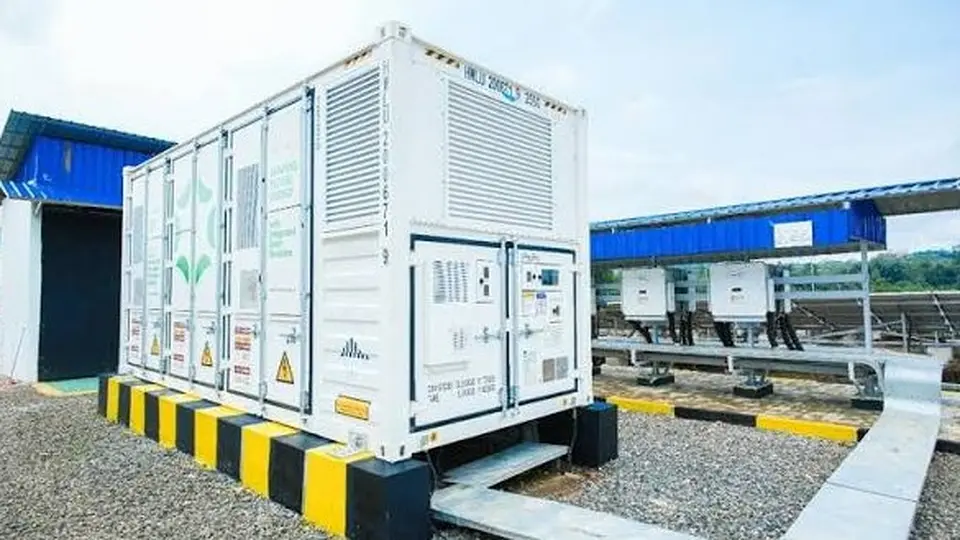
A commercial battery backup system stores electricity so it can be used later when a business needs it.
Electricity may come from the utility grid, an onsite solar installation, or another distributed energy source.
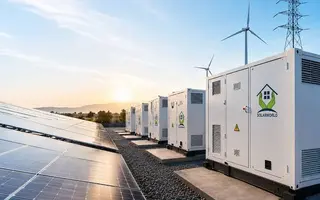
A typical commercial battery energy storage system includes:
- Battery modules or battery cabinets
- Battery management system
- Power conversion system or inverter
- Energy management software
- Electrical switchgear
- Monitoring and control equipment
- Thermal management systems
- Safety and fire protection equipment
When the utility grid fails, appropriately configured batteries can supply electricity to designated critical loads.
When connected to solar panels, batteries can store excess solar electricity generated during the day and discharge it later.
Businesses may also use batteries for peak shaving, where stored electricity is discharged during periods of high demand to potentially reduce demand charges.
These multiple use cases make battery storage different from a conventional backup generator.
Best Commercial Battery Backup Systems for Businesses in 2026
There is no single battery system that is best for every commercial property. The right solution depends on facility size, electrical load, required backup duration, solar capacity, utility tariffs, local regulations, and available budget.
The following are major types of commercial battery solutions businesses may encounter when evaluating an energy storage project.
Tesla Megapack for Large Commercial and Utility-Scale Storage
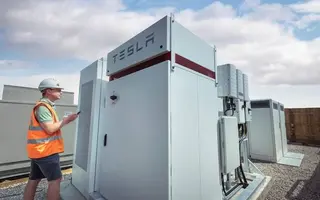
Tesla Megapack is designed primarily for large-scale battery energy storage applications.
Rather than functioning like a small wall-mounted residential battery, Megapack integrates large amounts of battery storage into a utility- or commercial-scale platform.
It may be suitable for:
- Large industrial facilities
- Data centers
- Manufacturing plants
- Large commercial campuses
- Renewable energy projects
- Microgrids
- Utility-scale installations
Its scale makes it more appropriate for businesses with substantial electrical demand rather than small offices or retail locations.
Pricing is highly project-specific because installation costs can include engineering, site preparation, transformers, switchgear, permitting, interconnection, and construction.
Tesla Powerwall-Based Solutions for Smaller Commercial Applications
Smaller businesses may sometimes consider multiple Tesla Powerwall units where local codes, system architecture, and installer designs allow them.
Potential applications include:
- Small offices
- Retail stores
- Small professional buildings
- Restaurants
- Small commercial solar projects
However, businesses should carefully evaluate whether a residential-oriented battery platform is appropriate for their commercial electrical requirements.
Larger facilities will typically require dedicated commercial or industrial battery storage architecture.
Enphase Commercial Energy Solutions
Enphase is widely associated with solar microinverters and energy management technology.
Depending on project availability and system design, Enphase-based energy ecosystems can be attractive for businesses seeking integrated solar generation, monitoring, and energy management.
Potential advantages may include modular system architecture and detailed energy monitoring.
These solutions may be considered by:
- Small commercial properties
- Offices
- Retail facilities
- Multifamily properties
- Businesses installing solar and storage together
Actual commercial storage availability, product configuration, and compatibility should always be confirmed with qualified installers.
Generac Commercial Energy Storage and Backup Solutions
Generac provides multiple energy technologies, including generators, distributed energy resources, and energy management solutions.
For businesses, hybrid energy resilience strategies can be particularly valuable.
For example, a facility might combine:
Solar + battery storage + standby generator
The battery can respond rapidly and potentially reduce daily energy costs, while a generator can provide longer-duration backup when outages exceed available battery capacity.
This type of hybrid configuration may be attractive for businesses where prolonged power interruptions could cause significant financial losses.
Schneider Electric Microgrid and Energy Storage Solutions
Schneider Electric provides energy management, electrical infrastructure, automation, and microgrid technologies used across commercial and industrial facilities.
Rather than focusing only on a standalone battery product, these solutions may integrate:
- Battery storage
- Solar generation
- Building energy management
- Electrical distribution
- Microgrid controls
- Backup generation
This approach can be useful for large facilities requiring sophisticated control over multiple energy resources.
Potential users include hospitals, campuses, industrial plants, critical infrastructure, and large commercial properties.
Fluence Battery Energy Storage Solutions
Fluence specializes in large-scale energy storage technology and software.
Its systems are generally more relevant to large commercial, industrial, and utility applications than small businesses.
Potential use cases include:
- Grid services
- Renewable energy integration
- Peak demand management
- Large-scale backup applications
- Energy market participation
For energy-intensive facilities, software optimization can be nearly as important as battery capacity because the economic value of storage depends heavily on when and how electricity is charged and discharged.
Commercial Battery Backup System Cost in 2026
Commercial battery storage costs vary dramatically depending on system size and project complexity.
The battery itself represents only part of the total installed cost.
Businesses may also need to pay for:
- Engineering
- Permitting
- Electrical upgrades
- Inverters
- Transformers
- Switchgear
- Energy management software
- Installation labor
- Fire safety systems
- Interconnection studies
- Site preparation
The following figures are broad planning estimates rather than contractor quotes.
| Commercial Battery Project | Approximate Capacity | Estimated Installed Cost |
|---|---|---|
| Small business backup system | 30–100 kWh | $30,000–$120,000+ |
| Small-to-mid commercial storage | 100–250 kWh | $100,000–$300,000+ |
| Mid-size commercial BESS | 250–500 kWh | $200,000–$600,000+ |
| Large commercial storage | 500 kWh–1 MWh | $400,000–$1.2 million+ |
| Industrial battery storage | 1–5+ MWh | $800,000–$5 million+ |
| Large campus/utility-scale project | Multi-MWh | Custom project pricing |
Actual pricing can fall outside these ranges.
For example, a battery installed as part of a new commercial solar project may have different economics than a retrofit requiring major electrical upgrades.
Businesses should request detailed proposals showing equipment, engineering, installation, warranties, software fees, and projected operating savings separately.
What Determines Commercial Battery Storage Cost?
Several variables can significantly affect project pricing.
Battery Capacity in kWh
Battery capacity determines how much electricity can be stored.
A 500 kWh battery theoretically stores substantially more usable energy than a 100 kWh system, although usable capacity depends on system specifications and operating limits.
Businesses requiring longer backup duration generally need more battery capacity.
Power Rating in kW
Capacity and power are different.
kWh measures stored energy.
kW measures how much power the battery can deliver at a given time.
A business with heavy machinery may require a high power rating even if backup is needed for only a relatively short period.
Backup Duration
Businesses must determine how long critical equipment needs to operate during an outage.
Backing up an entire facility for eight hours may require dramatically more storage than supporting only essential systems for two hours.
Critical loads might include:
- Servers
- Refrigeration
- Security systems
- Lighting
- Medical equipment
- Communications
- Payment systems
- Essential manufacturing processes
Prioritizing critical loads can reduce required battery capacity and project cost.
Electrical Infrastructure
Older commercial buildings may require electrical upgrades before installing a large battery system.
Potential upgrades include switchgear, transformers, panels, wiring, and protection equipment.
These costs can materially change the final project budget.
Example Commercial Battery Backup Cost Calculation
Consider a hypothetical office building that wants a 250 kWh commercial battery storage system.
Assume the following illustrative costs:
| Project Component | Estimated Cost |
| Battery equipment | $150,000 |
| Inverter/power conversion equipment | $35,000 |
| Engineering and design | $15,000 |
| Electrical installation | $40,000 |
| Permits and interconnection | $10,000 |
| Monitoring and energy management | $10,000 |
| Estimated Total Installed Cost | $260,000 |
Now assume the project qualifies for incentives or tax benefits with an estimated effective value of $78,000.
The simplified net project cost becomes:
$260,000 − $78,000 = $182,000
Suppose the battery produces estimated annual economic benefits of:
- Demand charge savings: $24,000
- Energy arbitrage savings: $8,000
- Estimated outage-loss avoidance: $10,000
Total estimated annual value:
$42,000 per year
A simplified payback calculation would be:
$182,000 ÷ $42,000 = approximately 4.3 years
This example is intentionally simplified.
Actual ROI depends on utility tariffs, battery degradation, maintenance, financing costs, tax treatment, incentive eligibility, electricity prices, outage frequency, operating strategy, and other factors.
Businesses should obtain a site-specific financial model before investing.
How Commercial Batteries Can Reduce Demand Charges
Demand charges can represent a significant portion of electricity bills for some commercial customers.
Unlike energy charges based primarily on total kilowatt-hours consumed, demand charges may be based on the facility's highest electricity demand during a billing period or defined peak interval.
Imagine a facility normally operates around 300 kW but briefly reaches 500 kW when multiple pieces of equipment run simultaneously.
That short peak can increase demand-related charges.
A battery system can potentially discharge during those peaks.
If battery power reduces grid demand from 500 kW to 400 kW during the relevant interval, the facility may reduce its billed peak demand, depending on the utility tariff.
This strategy is commonly called peak shaving.
The value depends heavily on the local rate structure, which is why businesses should analyze at least 12 months of interval electricity data before sizing a battery primarily for demand-charge reduction.
Commercial Solar Plus Battery Storage
Battery economics may become more attractive when storage is paired with commercial solar.
Solar panels generate electricity during daylight hours. When generation exceeds immediate facility consumption, surplus electricity may be exported to the grid or stored in batteries.
Stored solar electricity can then potentially be used:
- During evening operations
- During expensive utility periods
- During peak demand events
- During grid outages, if backup functionality is properly configured
This combination can increase onsite use of solar electricity while improving resilience.
However, adding a battery does not automatically make every commercial solar project more profitable.
Businesses should compare:
Solar-only economics vs. solar-plus-storage economics
before signing a contract.
Battery Backup vs. Commercial Generator
Businesses often ask whether they should install batteries or a traditional generator.
The answer depends on the facility.
| Feature | Battery Storage | Standby Generator |
| Backup response | Very fast | Fast after startup |
| Fuel required onsite | No direct fuel during operation | Usually yes |
| Solar integration | Excellent | Limited |
| Peak shaving | Yes | Generally not primary use |
| Energy arbitrage | Possible | No |
| Long-duration outage | Limited by stored energy | Can run while fuel is available |
| Noise | Low | Higher |
| Local emissions during operation | None | Depends on fuel |
| Maintenance | Generally lower mechanical maintenance | Regular engine maintenance required |
For critical facilities, a hybrid approach may provide the strongest resilience.
A battery can handle immediate power needs and daily energy optimization, while a generator provides extended backup during long outages.
How to Choose the Best Commercial Battery Backup System
Choosing the right system requires more than comparing battery brands.
Analyze Your Electricity Usage
Obtain at least 12 months of utility bills and, ideally, interval demand data.
Look at:
- Monthly electricity consumption
- Maximum demand
- Peak demand timing
- Demand charges
- Time-of-use rates
- Seasonal variations
This data helps determine whether battery storage can produce meaningful financial savings.
Define Your Critical Loads
Do not automatically assume the battery needs to power the entire building.
Identify equipment that must remain operational.
For example, a warehouse may prioritize security, communications, refrigeration, and essential loading systems instead of backing up every electrical circuit.
Compare Usable Capacity, Not Just Nameplate Capacity
Two batteries with similar advertised capacities may provide different amounts of usable energy.
Review:
- Usable kWh
- Continuous power
- Peak power
- Depth of discharge
- Round-trip efficiency
- Warranty
- Expected degradation
- Cycle limits
Evaluate Software Capabilities
Energy management software can significantly influence battery economics.
Advanced systems can automatically determine when to charge or discharge based on:
- Electricity prices
- Demand peaks
- Solar production
- Weather forecasts
- Facility consumption
- Grid conditions
For large businesses, intelligent dispatch can create substantial value over the system's operating life.
Tips Before Buying a Commercial Battery Backup System
Businesses should avoid selecting a battery based only on the lowest upfront quote.
A stronger procurement process includes:
- Collect at least 12 months of electricity data before sizing the system.
- Clearly define whether the primary goal is backup power, energy savings, demand-charge reduction, or all three.
- Obtain multiple proposals from experienced commercial energy storage contractors.
- Compare warranties, degradation guarantees, and service agreements.
- Ask whether software subscriptions create recurring annual costs.
- Verify permitting, fire code, and utility interconnection requirements.
- Model multiple electricity-rate scenarios before calculating ROI.
- Evaluate solar-plus-storage if the property has sufficient roof, parking canopy, or ground space.
- Ask for both cash-purchase and financed project economics.
- Verify all tax and incentive assumptions with qualified tax and energy professionals.
Commercial Battery Storage in Texas
Texas businesses may have strong reasons to evaluate energy resilience due to extreme weather, grid reliability concerns, and a large competitive electricity market in many parts of the state.
Commercial batteries can potentially support:
- Backup power
- Solar self-consumption
- Peak demand management
- Energy market or demand-response opportunities where available
However, project economics vary significantly by utility territory and retail electricity plan.
Businesses should carefully review their specific electricity contract and interconnection requirements.
Facilities with high outage costs—such as data centers, refrigerated warehouses, manufacturing plants, and healthcare operations—may place additional value on resilience beyond direct utility bill savings.
Commercial Battery Storage in Florida
Florida businesses often consider backup power because hurricanes and severe storms can cause extended electricity outages.
Potential candidates include:
- Hotels
- Restaurants
- Grocery stores
- Medical facilities
- Assisted living facilities
- Warehouses
- Emergency-related businesses
Solar-plus-storage can provide valuable resilience, but battery capacity must be carefully designed for expected outage duration.
Businesses in hurricane-prone areas should also evaluate equipment location, flood exposure, wind requirements, and local building codes.
For long-duration backup, batteries may be combined with generators.
Commercial Battery Storage in California
California is one of the most established U.S. markets for distributed solar and energy storage.
Commercial customers may evaluate batteries because of:
- Time-of-use electricity pricing
- Demand charges
- Grid resilience concerns
- Public safety power shutoffs in some regions
- Solar integration
- State and utility programs that may support qualifying projects
The economics can vary considerably between utility territories and rate schedules.
Businesses should verify current eligibility for state, utility, and local incentive programs before calculating project ROI.
Because incentive programs and electricity tariffs change over time, financial models should use current program rules rather than historical assumptions.
Frequently Asked Questions
What is the best commercial battery backup system?
The best system depends on facility size, electrical demand, backup duration, budget, and energy strategy. Large industrial facilities may need MWh-scale battery energy storage systems, while smaller businesses may use modular commercial battery solutions.
How much does a commercial battery backup system cost?
Small commercial projects may cost tens of thousands of dollars, while larger commercial and industrial battery systems can cost hundreds of thousands or millions. Engineering, installation, electrical upgrades, and permitting can significantly affect total project cost.
How long can a commercial battery power a business?
Backup duration depends on usable battery capacity and electrical load.
For example, a 200 kWh usable battery supporting an average 50 kW critical load could theoretically provide roughly four hours of energy before accounting for efficiency losses and operational reserve requirements.
Can commercial batteries lower electricity bills?
Potentially. Batteries may reduce costs through demand-charge management, time-of-use optimization, solar self-consumption, or certain grid programs. Savings depend on the business's utility tariff and operating profile.
Is commercial battery storage worth the investment?
It can be valuable for businesses with high demand charges, expensive peak electricity, frequent outage exposure, substantial solar generation, or high costs associated with downtime.
A detailed financial analysis is necessary to determine whether the investment makes sense for a specific facility.
Can batteries replace commercial generators?
Sometimes, but not always.
Batteries are excellent for rapid-response backup and shorter outages, while fuel-based generators can provide longer-duration power as long as fuel remains available. Critical facilities may benefit from combining both technologies.
What size battery does a commercial building need?
Battery size depends on the facility's objectives.
A battery designed only for peak shaving may be sized differently from one intended to provide eight hours of emergency backup.
A professional energy audit and interval load analysis are usually required for accurate sizing.
Can a commercial battery be installed without solar panels?
Yes.
A standalone battery can charge from the utility grid and potentially provide backup power, peak shaving, or time-of-use optimization.
However, solar-plus-storage may provide additional benefits depending on the facility and local electricity market.
How long do commercial battery systems last?
Many modern lithium-based battery systems are designed for years of operation, but useful life depends on battery chemistry, cycling frequency, operating temperature, depth of discharge, and degradation.
Businesses should closely compare warranty terms and guaranteed capacity retention.
Conclusion: Finding the Best Commercial Battery Backup System for Your Business
The best commercial battery backup system is not necessarily the largest or most expensive option.
The strongest investment is a properly sized system that matches the facility's electrical load, utility tariff, resilience requirements, solar production, and financial objectives.
Small businesses may benefit from modular battery solutions, while manufacturing facilities, warehouses, data centers, hospitals, and large commercial campuses may require sophisticated MWh-scale energy storage and microgrid systems.
Before investing, businesses should compare multiple commercial battery storage proposals and request detailed projections covering installed cost, demand-charge savings, electricity savings, battery degradation, incentives, financing, and expected payback.
Ready to evaluate commercial battery storage? Request quotes from qualified commercial solar and battery storage providers, compare system designs and warranties, and calculate your potential savings before committing to a project