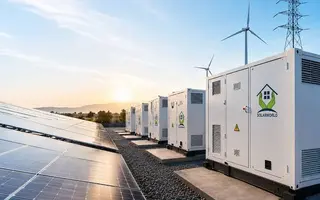
How Much Does a Commercial Solar System Cost in 2026? Complete Cost & ROI Guide
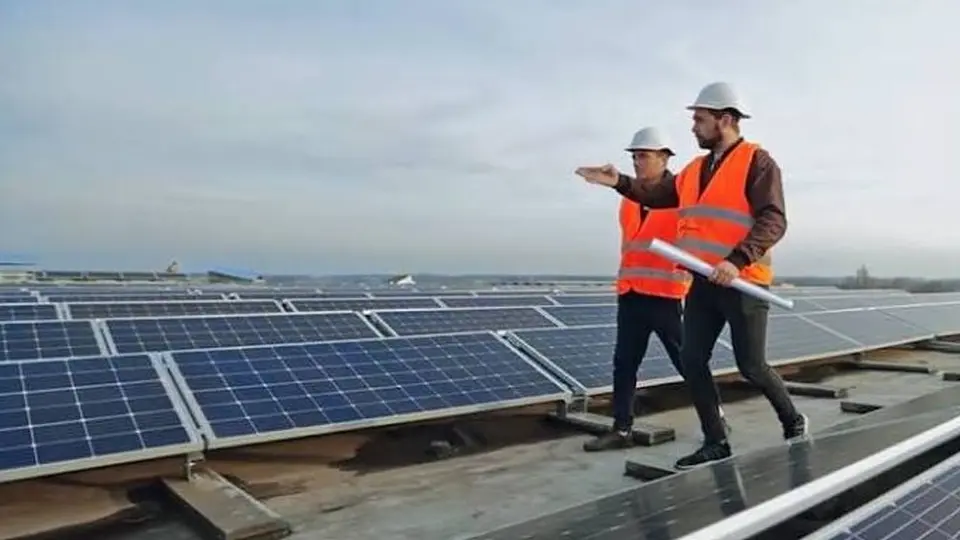
- Average Commercial Solar System Cost in 2026
- Commercial Solar Cost by System Size
- What Determines Commercial Solar Installation Cost?
- Solar System Size
- Solar Panel Type and Efficiency
- Roof-Mounted vs Ground-Mounted Solar
- Solar Carports
- Electrical Infrastructure
- Commercial Solar Cost Breakdown
- Commercial Solar Cost Calculation Example
- Step 1: Calculate Gross Project Cost
- Step 2: Estimate Illustrative Incentives
- Step 3: Estimate Annual Electricity Savings
- Step 4: Estimate Simple Payback
- How to Calculate Commercial Solar ROI
- Commercial Solar Payback Period
- Commercial Solar Financing Options
- Cash Purchase
- Commercial Solar Loans
- Solar Power Purchase Agreements
- Solar Leases
- Commercial Solar Tax Incentives in 2026
- Commercial Solar Cost in Texas
- Commercial Solar Cost in Florida
- Commercial Solar Cost in California
- Should You Add Battery Storage to Commercial Solar?
- Tips to Reduce Commercial Solar Installation Costs
- Hidden Commercial Solar Costs Businesses Should Consider
- Frequently Asked Questions
- How much does a commercial solar system cost in 2026?
- How much does a 100 kW commercial solar system cost?
- How much does a 500 kW commercial solar system cost?
- How much does a 1 MW commercial solar system cost?
- What is the average commercial solar cost per watt?
- How long does commercial solar take to pay for itself?
- Is commercial solar worth it for small businesses?
- Is it better to buy or finance commercial solar?
- Does commercial solar increase property value?
- Should businesses add battery storage to solar?
- Conclusion: Get Accurate Commercial Solar Cost Estimates Before Investing
Commercial solar can represent a major capital investment, but for businesses facing high electricity expenses, it can also become a long-term strategy for reducing operating costs and improving energy predictability.
So, how much does a commercial solar system cost in 2026?
There is no single price that applies to every business. A small office building may need a relatively modest rooftop system, while a manufacturing facility, warehouse, hotel, data center, or distribution center could require hundreds of kilowatts or even multiple megawatts of solar capacity.
As a broad planning range, a commercial solar project can cost anywhere from tens of thousands of dollars to several million dollars before incentives, depending on system size, equipment, location, roof or land conditions, electrical infrastructure, labor, permitting, and interconnection requirements.
The better question is not simply how much solar costs upfront.
Businesses should evaluate:
How much will the system cost after incentives, how much electricity will it produce, how much money can it save, and how long will it take to recover the investment?
This guide breaks down commercial solar costs, system pricing, ROI, financing considerations, and state-specific factors businesses should evaluate in 2026.
Average Commercial Solar System Cost in 2026
Commercial solar pricing is commonly discussed in terms of cost per watt of installed capacity.
For example, if a commercial solar project costs $2.00 per watt and the business installs a 500 kW system:
500,000 watts × $2.00 = $1,000,000
That represents the gross installed project cost before applicable tax incentives, rebates, grants, or other financial benefits.
Actual pricing varies substantially from one project to another.
For preliminary budgeting, businesses may encounter installed commercial solar costs broadly around $1.50 to $3.50+ per watt before incentives, depending on project scale and complexity.
Small rooftop projects often have higher per-watt costs than large commercial or industrial installations because fixed engineering, permitting, electrical, and project-management expenses are spread across fewer watts.
Commercial Solar Cost by System Size
The following table provides broad planning estimates for different commercial solar system sizes.
| System Size | Estimated Gross Cost Range | Typical Commercial Application |
|---|---|---|
| 50 kW | $90,000–$175,000+ | Small offices, retail, restaurants |
| 100 kW | $160,000–$300,000+ | Medium commercial buildings |
| 250 kW | $375,000–$700,000+ | Warehouses, dealerships, schools |
| 500 kW | $700,000–$1.3 million+ | Manufacturing and distribution |
| 1 MW | $1.3–$2.5 million+ | Large industrial facilities and campuses |
| 5 MW | $6 million–$11 million+ | Large industrial or utility-scale projects |
These estimates are intended for initial planning only.
A project requiring roof reinforcement, utility upgrades, complex interconnection, battery storage, premium equipment, carport structures, or significant site preparation may cost considerably more.
Businesses should request detailed engineering-based proposals before making investment decisions.
What Determines Commercial Solar Installation Cost?
Several major variables influence the final installed price.
Solar System Size
System capacity is one of the biggest cost drivers.
A 100 kW solar installation will generally cost much less in total than a 1 MW installation.
However, larger projects may achieve a lower cost per watt because equipment procurement, engineering, and installation can benefit from economies of scale.
For example:
100 kW system at $2.50/watt:
100,000 × $2.50 = $250,000
1 MW system at $1.70/watt:
1,000,000 × $1.70 = $1.7 million
The 1 MW project costs much more overall but has a lower cost per watt.
Solar Panel Type and Efficiency
Commercial projects can use different photovoltaic technologies and module efficiency levels.
Higher-efficiency panels may cost more but can generate more capacity from limited roof space.
This can be especially valuable for:
- Office buildings
- Hotels
- Retail centers
- Urban warehouses
- Medical facilities
- Data centers
If roof space is limited, paying more for higher-efficiency modules may improve the project's overall economics.
Roof-Mounted vs Ground-Mounted Solar
Installation type also affects pricing.
Rooftop solar can make use of otherwise unused commercial roof space and may reduce land requirements.
However, roof age, structural capacity, access, waterproofing, and fire-code requirements can affect cost.
Ground-mounted solar may be easier to optimize for orientation and system size but can require:
- Land
- Grading
- Foundations
- Trenching
- Fencing
- Environmental review
- Additional permitting
Businesses should compare total lifecycle costs rather than assuming one installation type is always cheaper.
Solar Carports
Solar carports can provide both electricity generation and covered parking.
They are popular for:
- Corporate campuses
- Hospitals
- Shopping centers
- Universities
- Hotels
- Government facilities
However, carport solar often costs more per watt than conventional rooftop installations because it requires substantial structural steel, foundations, drainage considerations, and construction work.
Adding EV charging can increase project cost further.
Electrical Infrastructure
Some commercial buildings require significant electrical upgrades before solar can be interconnected.
Possible expenses include:
- New transformers
- Switchgear upgrades
- Main service upgrades
- Electrical panels
- Protection equipment
- Utility interconnection equipment
- Monitoring systems
These costs can materially change project economics, especially in older buildings.
Commercial Solar Cost Breakdown
A commercial solar proposal generally includes more than solar panels.
| Cost Component | Typical Share of Project Cost |
| Solar modules | 20%–35% |
| Inverters | 8%–15% |
| Racking and mounting | 8%–15% |
| Electrical equipment | 10%–20% |
| Installation labor | 10%–20% |
| Engineering and design | 3%–8% |
| Permitting and interconnection | 2%–8% |
| Project management and overhead | 5%–15% |
Actual percentages vary significantly by project.
Businesses comparing commercial solar quotes should therefore look beyond panel prices.
A lower equipment price does not necessarily mean a lower total installed cost.
Commercial Solar Cost Calculation Example
Consider a hypothetical manufacturing company planning a 500 kW rooftop solar system.
Assume:
System size: 500 kW
Installed cost: $1.90 per watt
Step 1: Calculate Gross Project Cost
500 kW = 500,000 watts
500,000 × $1.90 = $950,000
Estimated gross project cost:
$950,000
Step 2: Estimate Illustrative Incentives
Assume, purely for illustration, that the project qualifies for combined federal, state, utility, and tax-related benefits equal to $285,000.
$950,000 − $285,000 = $665,000
Illustrative net project cost:
$665,000
The actual value and timing of incentives can differ substantially. Businesses should verify current federal tax rules and project eligibility with qualified tax professionals before including incentives in financial decisions.
Step 3: Estimate Annual Electricity Savings
Suppose the solar system produces:
700,000 kWh per year
Assume the average economic value of displaced electricity is:
$0.14 per kWh
700,000 × $0.14 = $98,000 annual gross electricity value
Step 4: Estimate Simple Payback
Assuming approximately $5,000 per year in average operations, maintenance, monitoring, and reserve costs:
$98,000 − $5,000 = $93,000 estimated annual net benefit
$665,000 ÷ $93,000 = 7.15 years
Estimated simple payback:
Approximately 7.2 years
This is a simplified example.
Actual ROI depends on electricity rate escalation, solar degradation, financing, tax treatment, demand charges, export compensation, maintenance, insurance, and other variables.
How to Calculate Commercial Solar ROI
Businesses should evaluate solar as a long-term investment rather than looking only at upfront installation costs.
A simplified ROI formula is:
ROI = (Lifetime Financial Benefits − Total Investment) ÷ Total Investment × 100
Suppose a business invests a net $665,000 after incentives.
Over 20 years, assume the project generates $1.8 million in cumulative net financial benefits.
($1,800,000 − $665,000) ÷ $665,000 × 100
Estimated simplified ROI:
170.7%
A professional model should also account for the time value of money.
Important metrics include:
- Simple payback
- Net Present Value (NPV)
- Internal Rate of Return (IRR)
- Cash-on-cash return
- Levelized Cost of Energy (LCOE)
Businesses comparing solar with other capital investments should pay particular attention to NPV and IRR.
Commercial Solar Payback Period
A commercial solar payback period represents the amount of time required for accumulated project savings to recover the initial investment.
A simple formula is:
Net Solar Investment ÷ Annual Net Savings = Simple Payback Period
Example:
Net project investment: $500,000
Annual net savings: $80,000
$500,000 ÷ $80,000 = 6.25 years
After the simple payback point, the system may continue producing financial benefits for many years, although maintenance, degradation, inverter replacement, insurance, and other lifecycle costs should still be considered.
Projects in areas with expensive electricity and strong incentives may achieve shorter payback periods.
Commercial Solar Financing Options
Businesses do not necessarily need to pay the entire solar installation cost upfront.
Several financing structures may be available.
Cash Purchase
Cash ownership can provide strong long-term economics for businesses with available capital.
Potential advantages include:
- Direct ownership
- Access to eligible tax benefits
- No loan interest
- Maximum control over the asset
The primary disadvantage is the large upfront capital requirement.
Commercial Solar Loans
Solar loans allow businesses to spread project costs over time.
Businesses should compare:
- Interest rates
- Loan terms
- Origination fees
- Prepayment rules
- Collateral requirements
- Monthly payments versus projected energy savings
A solar project can have an attractive technical ROI but weak cash flow if financing costs are too high.
Solar Power Purchase Agreements
Under a solar PPA, a third party generally owns the solar system and sells the electricity generated to the business under a long-term agreement.
Potential benefits can include lower upfront capital requirements.
However, businesses should carefully review:
- Electricity price
- Annual escalators
- Contract length
- Buyout provisions
- Property sale implications
- Maintenance responsibilities
Solar Leases
A solar lease may allow a business to use a solar installation for regular payments rather than purchasing the equipment outright.
As with PPAs, businesses should compare total contract costs with ownership economics.
Commercial Solar Tax Incentives in 2026
Tax incentives can significantly affect commercial solar economics, but businesses should be cautious about relying on outdated assumptions.
Federal clean-energy tax rules have changed significantly in recent years, and eligibility may depend on factors such as:
- Construction timing
- Project size
- Labor requirements
- Domestic content
- Project location
- Ownership structure
- Technology
- Current federal law
Certain projects may also have access to depreciation benefits, state incentives, utility programs, or grants.
Because tax policy can change, businesses should confirm current 2026 eligibility with a qualified tax professional and solar finance specialist before making investment decisions.
Do not assume that a percentage mentioned in an older solar article automatically applies to a new project.
Commercial Solar Cost in Texas
Texas offers strong solar resources and a large commercial electricity market, but project economics vary by utility territory and retail electricity arrangement.
Texas businesses should evaluate:
- Local electricity rates
- Retail energy contracts
- Demand charges
- Utility interconnection requirements
- Property tax treatment
- Local permitting
- Available utility incentives
A warehouse or manufacturing facility with high daytime electricity consumption may be particularly well suited for solar because much of the generated power can be consumed onsite.
For example, a 1 MW commercial system costing approximately $1.4 million to $2.4 million before incentives could potentially offset a significant amount of annual electricity consumption.
Actual savings depend on system production and the facility's electricity contract.
Commercial Solar Cost in Florida
Florida has strong solar production potential due to abundant sunshine.
Commercial solar can be attractive for:
- Hotels
- Resorts
- Warehouses
- Retail centers
- Healthcare facilities
- Office buildings
- Manufacturing operations
Businesses should investigate:
- Utility-specific interconnection rules
- Export compensation
- Insurance requirements
- Wind-load engineering
- Roof condition
- Hurricane-related structural requirements
Florida projects may require additional structural engineering to meet local wind and building-code requirements.
Businesses located in hurricane-prone areas should also consider how solar installations interact with insurance coverage and roof warranties.
Commercial Solar Cost in California
California has historically been one of the largest commercial solar markets in the United States.
However, solar economics can be more complex because of:
- High electricity prices
- Time-of-use rates
- Demand charges
- Export compensation rules
- Utility-specific tariffs
- Permitting requirements
Commercial solar systems may deliver strong savings when a business consumes a large percentage of solar production onsite.
Battery storage can also improve project economics in certain situations by shifting energy into higher-value periods.
For example, instead of exporting excess midday solar production, a business may store energy and use it later when grid electricity is more expensive.
Businesses should model solar-only versus solar-plus-storage before making a final investment decision.
Should You Add Battery Storage to Commercial Solar?
Battery storage increases upfront project costs but can create additional value.
Potential benefits include:
- Demand charge reduction
- Peak shaving
- Time-of-use optimization
- Increased solar self-consumption
- Backup power
- Energy resilience
Consider a commercial solar project costing $1 million.
Adding a battery system could increase the total investment substantially.
However, if the battery generates $50,000–$100,000+ in additional annual financial value through demand reduction and energy management, the combined solar-plus-storage project may produce attractive economics.
Businesses should use a dedicated commercial battery storage ROI calculator to compare scenarios before adding storage.
Tips to Reduce Commercial Solar Installation Costs
There are several ways businesses can potentially improve project economics.
- Get multiple commercial solar quotes. Compare at least three qualified EPC or solar contractor proposals when possible.
- Compare cost per watt carefully. Make sure each proposal includes comparable equipment, engineering, permitting, interconnection, warranties, and monitoring.
- Avoid oversizing the system. A larger system does not automatically produce a better ROI, especially where exported solar receives low compensation.
- Analyze interval electricity data. Detailed consumption data can help determine the optimal system size.
- Evaluate incentives before signing. Some incentives require applications or approvals before construction begins.
- Compare cash, loan, lease, and PPA economics. The lowest upfront cost may not provide the lowest lifetime cost.
- Inspect the roof before installation. Installing solar on a roof that needs replacement soon can create expensive removal and reinstallation costs.
- Consider solar and battery storage together. Designing both systems simultaneously may produce better integration than adding storage later.
- Negotiate based on total project value. Do not choose a contractor solely because of the lowest quoted price.
Hidden Commercial Solar Costs Businesses Should Consider
A realistic budget should include potential expenses beyond the initial installation quote.
These may include:
- Roof repairs
- Structural reinforcement
- Transformer upgrades
- Switchgear replacement
- Interconnection studies
- Utility upgrades
- Permitting fees
- Insurance adjustments
- Monitoring subscriptions
- Operations and maintenance
- Inverter replacement
- Vegetation management for ground-mounted projects
- Solar panel removal and reinstallation during future roof work
For example, a business receiving an $800,000 solar proposal may later discover that $100,000 in electrical infrastructure upgrades are required.
That changes both the total investment and projected ROI.
Request a clear explanation of what is included—and excluded—from every commercial solar proposal.
Frequently Asked Questions
How much does a commercial solar system cost in 2026?
Commercial solar projects can range from tens of thousands of dollars for smaller installations to several million dollars for large industrial systems. A broad planning range may be approximately $1.50 to $3.50+ per watt before incentives, depending on project size and complexity.
How much does a 100 kW commercial solar system cost?
A 100 kW commercial system might cost approximately $160,000 to $300,000 or more before incentives. Roof conditions, equipment, labor, location, and electrical upgrades can significantly affect pricing.
How much does a 500 kW commercial solar system cost?
A 500 kW system may cost roughly $700,000 to $1.3 million or more before incentives, depending on installation type and project complexity.
How much does a 1 MW commercial solar system cost?
A 1 MW commercial solar installation may cost approximately $1.3 million to $2.5 million or more before incentives. Large ground-mounted or complex industrial projects can fall outside this range.
What is the average commercial solar cost per watt?
Commercial solar costs vary widely, but businesses may encounter planning estimates around $1.50 to $3.50+ per installed watt. Large projects often achieve lower per-watt pricing than smaller installations.
How long does commercial solar take to pay for itself?
Commercial solar payback can range from several years to more than a decade. Electricity rates, incentives, system cost, financing, production, and onsite energy consumption all influence payback.
Is commercial solar worth it for small businesses?
It can be, especially for businesses with high daytime electricity consumption, suitable roof or land space, and favorable financing. A site-specific ROI analysis is essential before investing.
Is it better to buy or finance commercial solar?
Cash ownership may maximize long-term returns, while financing can preserve working capital. Businesses should compare interest costs, tax benefits, monthly cash flow, and total lifetime savings.
Does commercial solar increase property value?
Solar may improve the attractiveness and operating economics of certain commercial properties, but the impact on property value depends on ownership structure, local real estate conditions, system age, energy savings, and transferability of financing agreements.
Should businesses add battery storage to solar?
Battery storage may improve economics when a facility has high demand charges, time-of-use rates, low solar export compensation, or significant resilience needs. Businesses should compare solar-only and solar-plus-storage ROI before deciding.
Conclusion: Get Accurate Commercial Solar Cost Estimates Before Investing
So, how much does a commercial solar system cost in 2026?
For planning purposes, commercial solar installations may range from roughly $1.50 to $3.50+ per watt before incentives, with total project costs ranging from tens of thousands to millions of dollars.
But upfront price should not be the only factor in the decision.
A strong commercial solar investment analysis should evaluate:
- Total installed cost
- Electricity savings
- Cost per watt
- Federal and state incentives
- Financing costs
- Solar production
- Utility tariffs
- Demand charges
- Maintenance expenses
- Payback period
- NPV and IRR
- Battery storage opportunities
The most profitable system is not necessarily the cheapest or largest system. It is the system designed around the facility's actual electricity consumption, utility tariff, available space, and financial objectives.
Planning a commercial solar project in 2026? Request multiple quotes from qualified commercial solar installers and compare equipment, cost per watt, financing, incentives, projected annual savings, warranties, and expected ROI before signing a contract.