Commercial Solar for Data Centers: Lower Electricity Expenses and Improve Energy Resilience
- Why Data Centers Are Strong Candidates for Commercial Solar
- Electricity Is a Major Operating Expense
- Data Centers Operate During Solar-Production Hours
- Large Campuses May Offer Significant Installation Space
- How Commercial Solar Reduces Data Center Electricity Costs
- Reducing Energy Charges
- Reducing Peak-Demand Charges
- Improving Long-Term Energy-Price Predictability
- Commercial Solar Installation Cost for Data Centers
- Data Center Solar Cost Breakdown
- Example Data Center Solar Cost Calculation
- Gross Installation Cost
- Additional Infrastructure Expenses
- Estimated Financial Benefits
- Estimated Annual Electricity Savings
- Can Solar Fully Power a Data Center?
- Solar Plus Battery Storage for Data Centers
- Illustrative Commercial Battery Costs
- Battery Storage Is Not Automatically a Replacement for UPS Systems
- Data Center Microgrids and Energy Resilience
- On-Site Solar vs Off-Site Power Purchase Agreements
- Measuring Data Center Solar ROI
- Simple Payback Formula
- Why Resilience Value Should Be Calculated Separately
- Commercial Solar for Data Centers in Texas
- Commercial Solar for Data Centers in Florida
- Commercial Solar for Data Centers in California
- How to Lower Data Center Solar Installation Costs
- Use Detailed Interval Energy Data
- Combine Solar Planning With Energy Efficiency
- Compare Multiple Installation Designs
- Coordinate Electrical Upgrades
- Verify Incentives Before Including Them
- Compare Lifetime Energy Cost
- Questions to Ask Data Center Solar Contractors
- Frequently Asked Questions
- Is solar power suitable for data centers?
- How much does a data center solar system cost?
- Can solar panels run a data center at night?
- Can solar provide backup power for a data center?
- How many solar panels does a data center need?
- What is the typical payback period for data center solar?
- Should data centers install battery storage with solar?
- Is an off-site solar PPA better than on-site solar?
- Does solar replace diesel generators?
- What is a data center microgrid?
- Build a Lower-Cost and More Resilient Data Center
Data centers require enormous amounts of reliable electricity to operate servers, storage systems, networking equipment, cooling infrastructure, security systems, and backup-power equipment.
Unlike ordinary commercial buildings, data centers often run continuously, 24 hours a day and 365 days a year. Even a relatively small facility can consume substantially more electricity per square foot than a traditional office building.
This high and constant energy demand creates a major financial challenge.
Electricity can represent one of the largest controllable operating expenses for colocation facilities, cloud-computing campuses, enterprise data centers, edge-computing sites, and artificial-intelligence infrastructure.
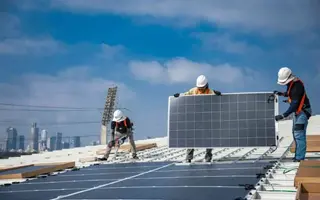
Commercial solar for data centers can help reduce those expenses by producing electricity on-site or through an off-site renewable-energy arrangement.
Solar may also improve long-term energy-price predictability, support corporate sustainability commitments, and reduce pressure on increasingly constrained electrical grids.
The opportunity is becoming more important as computing demand increases. The U.S. Department of Energy reported that data centers consumed approximately 4.4% of total U.S. electricity in 2023 and could account for approximately 6.7%–12% by 2028.
However, solar alone does not provide uninterrupted power during every hour of the day.
Data center operators must evaluate solar alongside battery storage, generators, utility service, energy-efficiency upgrades, microgrid controls, and long-term power-purchasing strategies.
This guide explains how data center solar systems work, what they may cost, how much they can save, and how operators can evaluate solar, battery storage, financing, and resilience.
Why Data Centers Are Strong Candidates for Commercial Solar
Data centers have several characteristics that make renewable energy financially and strategically valuable.
Electricity Is a Major Operating Expense
Data centers continuously power:
- Servers and storage equipment
- Networking hardware
- Cooling systems
- Pumps and fans
- Lighting
- Security systems
- Fire-suppression systems
- Battery rooms
- Uninterruptible power supplies
- Monitoring and control equipment
As computing density increases, electricity demand can rise significantly without a proportional increase in facility size.
The U.S. Energy Information Administration estimates that commercial computing represented approximately 8% of U.S. commercial-building electricity consumption in 2024 and could grow to 20% by 2050.
Reducing even a portion of this electricity expense can generate substantial long-term savings.
Data Centers Operate During Solar-Production Hours
Solar panels generate electricity during daylight hours.
Although data centers consume power continuously, they still have substantial daytime demand. This makes it possible for facilities to use solar generation directly rather than exporting most of it to the utility.
Direct consumption can improve project economics, especially when the facility avoids expensive utility electricity, peak-period energy charges, or transmission-related costs.
Large Campuses May Offer Significant Installation Space
Potential solar locations include:
- Data center rooftops
- Administrative buildings
- Parking structures
- Solar carports
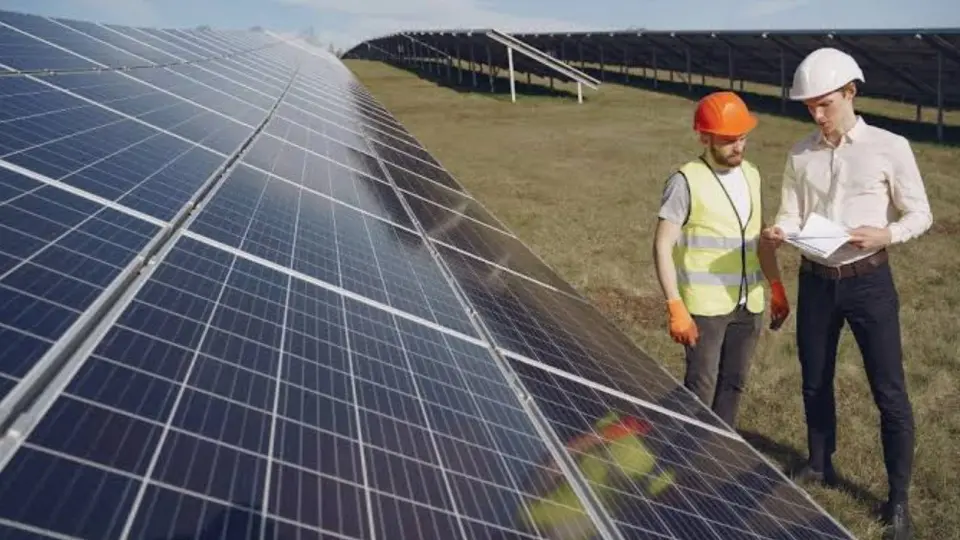
- Ground-mounted areas
- Adjacent industrial land
- Retired or underused property
- Utility-scale off-site solar farms
Roof space alone is rarely sufficient to power a major hyperscale data center, but it may still offset part of the facility’s demand.
Large operators may combine on-site solar with off-site Power Purchase Agreements, utility renewable-energy programs, and energy-storage projects.
How Commercial Solar Reduces Data Center Electricity Costs
Commercial solar reduces energy expenses by producing electricity that would otherwise be purchased from the grid.
The financial benefit depends on:
- Solar-system production
- Utility electricity rates
- Time-of-use pricing
- Demand charges
- Facility load profile
- Export compensation
- Financing costs
- Battery-storage operation
- Maintenance expenses
Reducing Energy Charges
Suppose a data center installs a solar system that produces 5 million kWh annually.
If the average avoided electricity cost is $0.11 per kWh:
5,000,000 kWh × $0.11 = $550,000 in estimated annual gross energy savings
The actual value may vary throughout the day.
Solar produced during expensive utility-rate periods can be more valuable than solar generated during low-cost periods.
Reducing Peak-Demand Charges
Many commercial and industrial customers pay demand charges based on their highest electricity demand during a billing period.
Solar may reduce peak demand if the facility’s highest grid usage occurs during daylight hours.
However, data center demand is often relatively constant, while solar generation changes with clouds and the time of day.
Battery storage can provide more controlled demand-charge reduction by discharging when facility demand approaches a predetermined threshold.
Improving Long-Term Energy-Price Predictability
Utility rates, capacity charges, transmission expenses, and power-market prices may change over time.
Owning solar allows a data center to produce part of its electricity at a more predictable long-term cost.
This can support budgeting, customer pricing, and long-term operating forecasts.
Commercial Solar Installation Cost for Data Centers
Commercial solar pricing depends on system size, site conditions, equipment quality, engineering complexity, labor, utility interconnection, and electrical upgrades.
The following ranges are broad planning estimates rather than guaranteed prices.
| Solar System Size | Potential Application | Illustrative Cost per Watt | Estimated Gross Cost |
|---|---|---|---|
| 250 kW | Edge data center or small server facility | $1.60–$2.80 | $400,000–$700,000 |
| 500 kW | Enterprise data center | $1.50–$2.60 | $750,000–$1.3 million |
| 1 MW | Medium data center campus | $1.40–$2.40 | $1.4–$2.4 million |
| 2 MW | Large colocation facility | $1.30–$2.30 | $2.6–$4.6 million |
| 5 MW | Large data center campus | $1.20–$2.10 | $6–$10.5 million |
| 10 MW | Hyperscale campus or off-site project | $1.10–$2.00 | $11–$20 million |
Actual costs may be higher when the project requires:
- New transformers
- High-voltage switchgear
- Utility interconnection studies
- Substation modifications
- Roof reinforcement
- Extensive trenching
- Solar-carport structures
- Environmental permitting
- Advanced microgrid controls
- Battery-storage integration
Data Center Solar Cost Breakdown
A typical solar budget may include the following components.
| Project Component | Typical Cost Consideration |
| Solar modules | Efficiency, warranty, degradation and available space |
| Inverters | Power capacity, redundancy and maintenance access |
| Racking | Rooftop, ground-mount or carport structure |
| Electrical equipment | Transformers, switchgear and protection systems |
| Engineering | Structural, electrical, civil and utility design |
| Installation labor | Site access, safety and construction complexity |
| Interconnection | Utility studies, meters and system upgrades |
| Monitoring | Production tracking and energy-management integration |
| Battery storage | Peak shaving, load shifting and backup support |
| Microgrid controls | Coordination of solar, batteries, generators and utility power |
Data centers should request a detailed scope of work rather than comparing only the total project price.
Example Data Center Solar Cost Calculation
Consider a hypothetical colocation data center evaluating a 4 MW ground-mounted solar installation.
Gross Installation Cost
System capacity:
4 MW = 4,000,000 watts
Assumed installation price:
$1.65 per watt
Gross solar cost:
4,000,000 × $1.65 = $6,600,000
Additional Infrastructure Expenses
| Additional Expense | Estimated Cost |
| Transformer and switchgear upgrades | $450,000 |
| Utility interconnection study and equipment | $250,000 |
| Civil engineering and site preparation | $300,000 |
| Energy-monitoring integration | $100,000 |
| Project contingency | $300,000 |
| Total Additional Expenses | $1,400,000 |
Adjusted gross project cost:
$6,600,000 + $1,400,000 = $8,000,000
Estimated Financial Benefits
Assume the owner estimates $2,200,000 in applicable tax benefits, incentives, or other financial support.
Estimated effective investment:
$8,000,000 − $2,200,000 = $5,800,000
The final value of incentives depends on current federal rules, project eligibility, tax liability, labor requirements, equipment sourcing, ownership structure, and financing.
For qualifying facilities and energy-storage systems placed in service after December 31, 2024, the federal Clean Electricity Investment Credit may be available. The IRS states that the base credit is 6%, with possible increases when additional requirements are satisfied.
Estimated Annual Electricity Savings
Assume the solar system produces:
6,400,000 kWh per year
Average avoided electricity cost:
$0.105 per kWh
Gross annual electricity savings:
6,400,000 × $0.105 = $672,000
Estimated demand-charge savings:
$90,000
Estimated operations and maintenance:
$55,000 per year
Estimated annual net benefit:
$672,000 + $90,000 − $55,000 = $707,000
Estimated simple payback:
$5,800,000 ÷ $707,000 = approximately 8.2 years
This simplified calculation excludes financing interest, panel degradation, electricity-rate escalation, tax timing, inverter replacement, and discounted cash flow.
Can Solar Fully Power a Data Center?
In most cases, rooftop solar alone cannot fully power a large data center.
Data centers have high, continuous electricity requirements, while solar production is intermittent and limited to daylight hours.
A facility may need several times more solar capacity than its average electrical load to produce an equivalent amount of energy over an entire year.
For example, a data center with a constant 10 MW load consumes approximately:
10 MW × 24 hours × 365 days = 87,600 MWh annually
A 10 MW solar array may generate only a fraction of that annual requirement, depending on location and system design.
Fully matching data center electricity consumption may therefore require:
- Large off-site solar projects
- Wind energy
- Utility renewable programs
- Battery storage
- Long-duration storage
- Firm generation
- Power Purchase Agreements
- Multiple renewable-energy resources
Solar is usually one component of a broader energy portfolio rather than a complete standalone solution.
Solar Plus Battery Storage for Data Centers
Battery storage can increase the financial and operational value of solar.
Potential benefits include:
- Peak-demand reduction
- Time-of-use optimization
- Load shifting
- Short-duration backup
- UPS support
- Generator transition support
- Power-quality management
- Grid-service participation
- Renewable-energy utilization
Illustrative Commercial Battery Costs
| Battery Capacity | Potential Application | Illustrative Installed Cost |
| 500 kWh | Edge facility or critical IT load | $350,000–$850,000 |
| 1 MWh | Demand management | $700,000–$1.6 million |
| 2 MWh | Peak shaving and resilience | $1.4–$3.2 million |
| 5 MWh | Large data center load shifting | $3.5–$8 million |
| 10 MWh | Campus-scale energy management | $7–$16+ million |
Pricing varies according to power output, storage duration, battery chemistry, safety requirements, warranty, control systems, and site construction.
Battery Storage Is Not Automatically a Replacement for UPS Systems
Data centers commonly use UPS systems to provide immediate power during utility interruptions and while generators start.
A commercial energy-storage system may complement a UPS, but it should not be assumed to replace it.
The design must consider:
- Required response time
- Power quality
- Runtime
- Redundancy
- Failure tolerance
- Cybersecurity
- Fire protection
- Equipment certification
Critical-load backup should be engineered by specialists familiar with data center uptime requirements.
Data Center Microgrids and Energy Resilience
A microgrid coordinates multiple energy resources and can sometimes operate independently from the utility grid.
A data center microgrid may include:
- Solar panels
- Battery storage
- Diesel generators
- Natural gas generators
- Fuel cells
- Combined heat and power
- Utility electricity
- Automated load controls
- Advanced energy-management software
During normal operation, the microgrid may optimize energy costs.
During an outage, it may isolate from the grid and support selected facility loads.
The Department of Energy identifies on-site power generation and storage as important strategies for managing growing data center electricity demand.
Microgrids can improve resilience, but they also add engineering, controls, protection, testing, cybersecurity, and maintenance requirements.
On-Site Solar vs Off-Site Power Purchase Agreements
Data center operators can procure solar energy in several ways.
| Solar Strategy | Ownership | Primary Benefit | Main Limitation |
| Rooftop solar | Facility or third party | Uses existing building space | Limited capacity |
| Ground-mounted solar | Facility or third party | Larger system potential | Requires available land |
| Solar carport | Facility or third party | Energy plus covered parking | Higher structural cost |
| On-site PPA | Third-party provider | Low upfront capital | Long-term contract |
| Off-site PPA | Renewable project owner | Supports large energy volumes | Does not provide direct backup power |
| Virtual PPA | Financial contract | Renewable-energy procurement at scale | Market-price and contract complexity |
| Utility green tariff | Utility program | Simplified renewable procurement | Pricing and availability vary |
On-site solar directly reduces electricity purchased behind the meter.
Off-site renewable contracts may help match a larger portion of annual electricity consumption but generally do not keep the facility powered during a local outage.
Measuring Data Center Solar ROI
A complete financial analysis should include more than cost per watt.
Important metrics include:
- Annual electricity savings
- Demand-charge savings
- Simple payback period
- Net present value
- Internal rate of return
- Lifetime cost per kWh
- Financing expenses
- Maintenance costs
- Equipment degradation
- Replacement costs
- Tax effects
- Residual system value
Simple Payback Formula
Net Solar Investment ÷ Annual Net Savings = Payback Period
Example:
- Net investment: $5,000,000
- Annual energy savings: $650,000
- Annual maintenance: $50,000
- Net annual savings: $600,000
Estimated payback:
$5,000,000 ÷ $600,000 = approximately 8.3 years
Why Resilience Value Should Be Calculated Separately
The financial impact of a data center outage may include:
- Service-level agreement penalties
- Lost customer revenue
- Data-processing interruption
- Equipment recovery expenses
- Reputational damage
- Customer churn
- Staff overtime
- Emergency fuel costs
Solar and batteries may help reduce some outage risks, but resilience value should be modeled separately from routine electricity savings.
Commercial Solar for Data Centers in Texas
Texas is a major data center market with strong solar resources and rapidly growing electricity demand.
EIA has identified data centers and cryptocurrency mining as important contributors to Texas power-demand growth.
Texas data center operators should evaluate:
- ERCOT market exposure
- Retail electricity contract terms
- Utility interconnection capacity
- Transmission constraints
- Demand charges
- Solar-production potential
- Extreme-heat cooling demand
- Battery-storage revenue opportunities
- Backup-power requirements
Solar generation can align well with summer cooling demand, but operators should not assume it will eliminate exposure to evening or overnight power prices.
Battery storage, fixed-price supply agreements, and diversified generation may help manage that risk.
Commercial Solar for Data Centers in Florida
Florida offers strong solar production potential, but data center projects must account for severe weather and cooling demand.
Important considerations include:
- Hurricane wind-load requirements
- Flood risk
- Roof and structural design
- Coastal corrosion
- Insurance requirements
- Utility interconnection
- Generator fuel supply
- Battery fire protection
- Emergency-response planning
Ground-mounted solar and carports may require robust structural engineering.
Data centers should also evaluate whether solar and batteries can support selected cooling, networking, or control loads during prolonged outages.
Commercial Solar for Data Centers in California
California data centers may face high electricity prices, time-of-use tariffs, demand charges, grid constraints, and local permitting requirements.
Operators should analyze:
- Hourly electricity consumption
- Utility tariff structure
- Peak-demand periods
- Export compensation
- Battery-storage economics
- Local interconnection limits
- Wildfire-related outage risks
- Renewable-procurement requirements
- Community and environmental approvals
Solar-plus-storage can be particularly valuable when batteries charge during solar-production hours and discharge during expensive evening periods.
However, the economics depend on the applicable utility tariff and the battery’s operating strategy.
How to Lower Data Center Solar Installation Costs
Use Detailed Interval Energy Data
Data centers should analyze 15-minute or hourly electricity consumption rather than relying only on monthly utility bills.
Interval data helps identify:
- Base load
- Peak demand
- Cooling-related load changes
- Time-of-use exposure
- Battery-dispatch opportunities
- Appropriate solar-system size
Combine Solar Planning With Energy Efficiency
The most cost-effective kilowatt-hour may be the one the facility no longer needs to consume.
Operators should evaluate:
- Server utilization
- Cooling efficiency
- Hot-aisle and cold-aisle containment
- Airflow management
- Efficient UPS equipment
- Liquid cooling
- Power-distribution losses
- Power Usage Effectiveness
Reducing load before sizing solar can lower the required system capacity and capital cost.
Compare Multiple Installation Designs
Operators should compare:
- Rooftop solar
- Ground-mounted solar
- Solar carports
- Adjacent-property installations
- Off-site solar PPAs
The lowest-cost design may depend on available land, roof condition, electrical infrastructure, and utility-interconnection access.
Coordinate Electrical Upgrades
Data centers planning new transformers, switchgear, substations, or utility service should coordinate those investments with solar and battery planning.
Integrated engineering can reduce duplicated work and future retrofit expenses.
Verify Incentives Before Including Them
Financial models should not treat incentives as guaranteed.
Operators should verify:
- Federal tax-credit eligibility
- Prevailing-wage and apprenticeship rules
- Domestic-content requirements
- Energy-community eligibility
- State programs
- Utility incentives
- Tax-credit transfer options
- Depreciation treatment
Compare Lifetime Energy Cost
A low cost per watt does not always produce the best project.
Compare proposals using:
- Expected annual production
- Equipment degradation
- Operations and maintenance
- Inverter replacement assumptions
- Warranty coverage
- Lifetime cost per kWh
- Net present value
- Internal rate of return
Questions to Ask Data Center Solar Contractors
Before approving a project, operators should ask:
- How many mission-critical facilities has your company completed?
- How will construction avoid disrupting data center operations?
- What electrical shutdowns will be required?
- Are switchgear and transformer upgrades included?
- What utility-interconnection expenses are excluded?
- Can the system integrate with existing UPS and generators?
- Is the project designed for future battery storage?
- What annual solar production is expected?
- What degradation rate is included in the model?
- How will cybersecurity risks in the monitoring platform be managed?
- What maintenance and response-time guarantees are included?
- What happens if system production is below forecast?
Frequently Asked Questions
Is solar power suitable for data centers?
Yes. Solar can reduce grid-electricity purchases, improve long-term energy-price predictability, and support sustainability goals. It is normally used alongside utility power, generators, storage, and efficiency measures.
How much does a data center solar system cost?
Many large commercial solar installations may cost approximately $1.10–$2.80 or more per watt before incentives. Electrical upgrades, interconnection, storage, land preparation, and microgrid controls can increase the total investment.
Can solar panels run a data center at night?
Not directly. Solar panels only generate electricity when sufficient sunlight is available. Nighttime operation requires utility power, batteries, generators, or other energy resources.
Can solar provide backup power for a data center?
Solar alone generally cannot provide backup power during a grid outage. The facility needs battery storage, suitable inverters, islanding controls, electrical-protection equipment, and integration with existing backup systems.
How many solar panels does a data center need?
The number depends on the facility’s electricity consumption, panel wattage, available space, and desired energy offset.
A 5 MW system using 500-watt panels would require approximately:
5,000,000 watts ÷ 500 watts = 10,000 panels
What is the typical payback period for data center solar?
A commercial solar project may target a simple payback period of approximately 6–12 years, although results vary based on electricity prices, project cost, incentives, financing, system output, and demand-charge savings.
Should data centers install battery storage with solar?
Battery storage may be valuable for peak-demand reduction, load shifting, short-duration backup, grid services, and renewable-energy utilization. The business case should be evaluated separately from solar.
Is an off-site solar PPA better than on-site solar?
Neither option is universally better. On-site solar directly reduces electricity purchases, while off-site PPAs may support much larger renewable-energy volumes. Many operators use both.
Does solar replace diesel generators?
Usually not. Solar and batteries can complement generators, reduce fuel usage, and support selected loads, but mission-critical facilities generally continue to maintain code-compliant backup generation.
What is a data center microgrid?
A data center microgrid coordinates utility power, solar, batteries, generators, and automated controls. It may optimize normal energy use and support selected loads during utility outages.
Build a Lower-Cost and More Resilient Data Center
Commercial solar can help data center operators reduce electricity expenses, improve energy-price predictability, and support long-term renewable-energy goals.
The strongest strategy is rarely based on solar alone.
A high-performing data center energy plan may combine:
- On-site solar
- Off-site renewable procurement
- Battery storage
- Efficient cooling
- Modern UPS equipment
- Generator integration
- Utility-rate optimization
- Microgrid controls
- Demand-response programs
Each project should be designed around the facility’s actual load profile, uptime requirements, available property, utility capacity, financial objectives, and future expansion plans.
Before investing, collect detailed interval electricity data, review utility tariffs, assess roofs and available land, identify critical loads, and request proposals from experienced commercial solar and energy-storage contractors. Compare installation cost, annual production, demand savings, financing, payback period, resilience capabilities, and lifetime ROI before choosing the best solution for your data center.